Advocacy Update: Unpacking the Key Issues of Engagement at US SIF’s 2026 Capitol Hill Day
US SIF’s annual Capitol Hill Day event brings together sustainable investors, managers, allocators, and other sector players from across the United States to share knowledge and advocate for policy change, with elected officials. Veris has been part of the US SIF community since our founding in 2007, and we share a belief with US SIF that it is crucial for impact investors to engage our elected officials and advocate for policy actions that support our work as a sector. Veris was proud to again sponsor and participate in the Capitol Hill Day event in 2026 to build on the work of the Congressional Sustainable Investment Caucus.
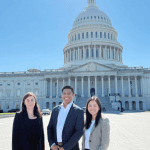
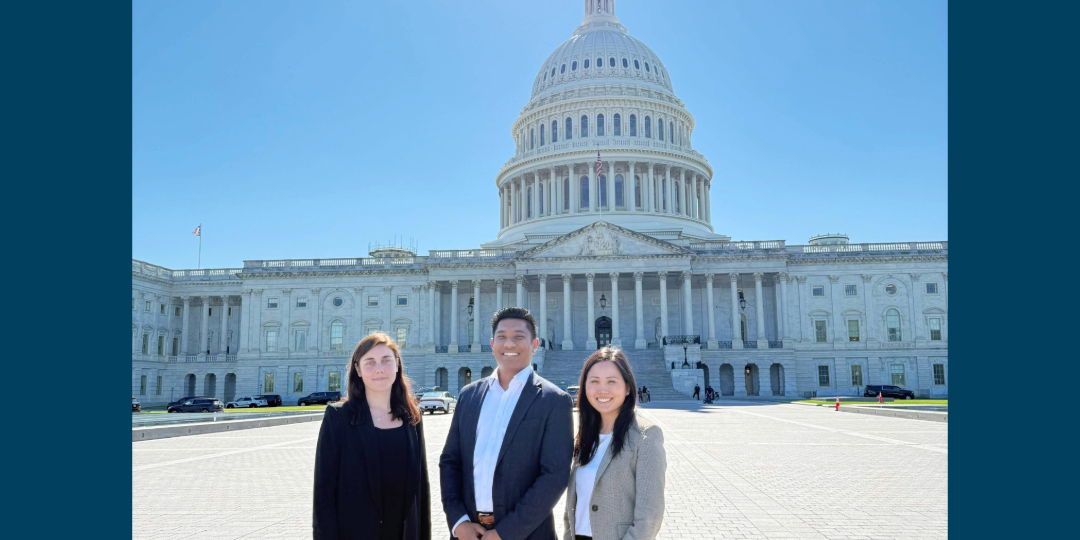
Members of the Veris delegation, including Maya Zamir, Roraj Pradhananga, Lori Choi, as well as several of our firm’s clients, traveled to Washington D.C. in June to engage with policymakers from across the political spectrum including the offices of Senator Michael F. Bennet (Colorado); Senator Kristen Gillibrand (New York), Representative Jim Himes (Connecticut); Senator Angela Alsobrooks (Maryland); Senator Peter Welch (Vermont); and Representative Nancy Pelosi (California), among others.
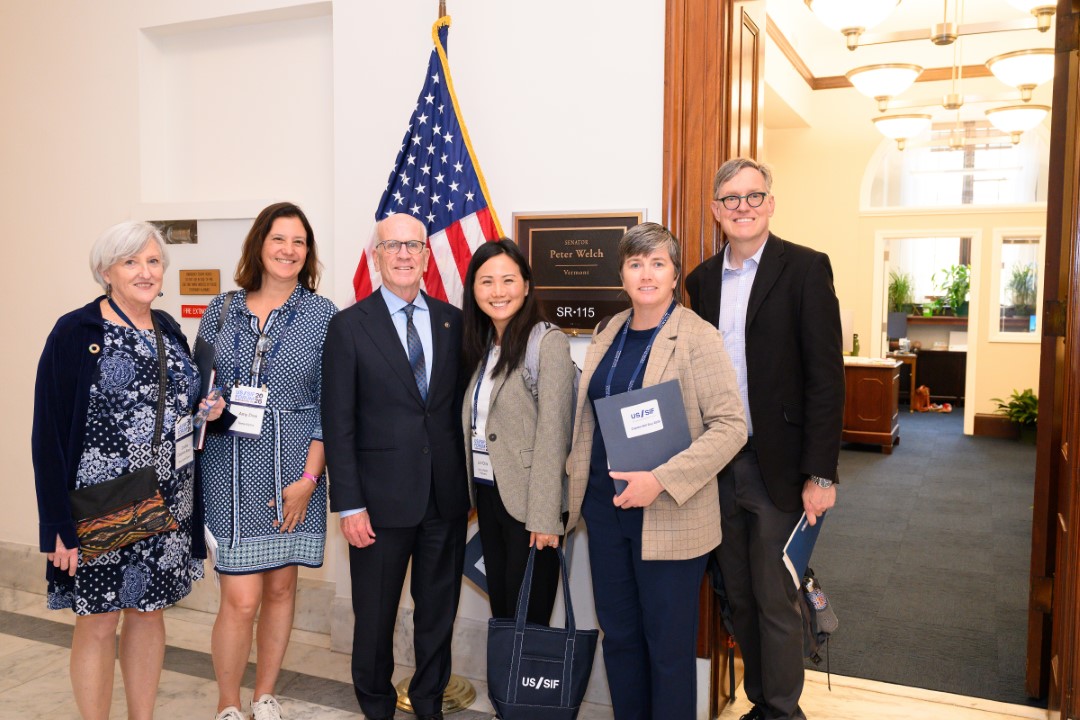
(L to R) Cecilia Ciepiela-Kaelin, Amy Dine, Vermont Senator Peter Welch, Veris Senior Advisor Lori Choi, Laura Devenney, Todd Larsen outside of Senator Welch’s office during US SIF’s Capitol Hill Day event.
The goals of these conversations were to better inform elected officials about the purpose and practice of sustainable investing, and to engage these policymakers on some of the pressing issues sustainable investors are concerned about today. Below, we offer an overview of the four key policy priorities that were at the heart of these conversations.
Key Issue 1: Support Investors’ Freedom to Invest
Several pieces of pending legislation target investors’ access to information that enables them to exercise their right to make material environmental, social, and governance (ESG) considerations in their investment decision-making processes.
We believe private asset owners should have the freedom to invest in alignment with their values or their organizational mission without governmental interference in how they weigh the financial risks and opportunities they consider material. At Veris, that freedom is foundational to how we serve clients: we meet each client where they are and construct portfolios around what matters to them, rather than prescribing what they should value.
Relevant Pending Legislation¹
If passed in its current form HR 8286, which is framed as the “Protecting Americans’ Retirement Savings From Politics Act” would impose a variety of changes that we believe would impact how ESG and values-aligned investing is practiced in the United States. For example, one provision would potentially limit investors’ access to sustainability data to assess long-term risks. Capitol Hill Day participants urged lawmakers to oppose HR 8286 and similar legislation that may restrict investors’ rights to invest in alignment with their values.
Key Issue 2: Protect Shareholder Rights
Shareholder advocacy is Veris’s theory of change in public markets. We believe that the right to file and vote on shareholder resolutions is part of the long-standing compact between companies and the investors who own them and we see it as a channel for surfacing material issues, improving corporate practices, and holding management accountable. When we talk about impact in public equities, this is largely what we mean: not simply screening or integrating sustainability factors but using our clients’ voices and votes to seek long-term, durable change. Recent legislative and regulatory proposals would make that harder, which is why we advocated to keep these rights intact.
Relevant Pending Legislation²
H.R. 3402 would mandate that institutional managers certify proxy votes aligned solely with the “best economic interest” of shareholders, restricting the ability to pursue ESG or impact goals.³ The proposed legislation increases compliance costs for opposing board recommendations, which may weaken the influence of shareholder advocacy. Capitol Hill Day participants urged policymakers to oppose HR 3402 and other bills that would limit shareholder’s rights.
Key Issue 3: Defend Proxy Advisors
Proxy advisors are the mechanism that makes shareholder advocacy workable at scale. A single fund may cast thousands of proxy votes in a season; proxy advisory firms provide the specialized research and voting infrastructure that allow investors to meet their fiduciary duty to vote thoughtfully across those holdings. Proxy Advisor Transparency Act (PATA) laws have been introduced in Texas and multiple other states that aim to limit the ability of proxy advisors to do this crucial work.⁴
Relevant Pending Legislation⁵
S3055, proposes amending the Investment Advisers Act of 1940 to require proxy advisory firms to register as investment advisers. The law would also require the SEC to review Proxy Advisor firms’ conflict of interest policies. Capitol Hill Day participants urged⁶ policymakers to support this bipartisan legislation to protect proxy advisors by increasing transparency and directly addressing concerns about potential conflicts of interest.
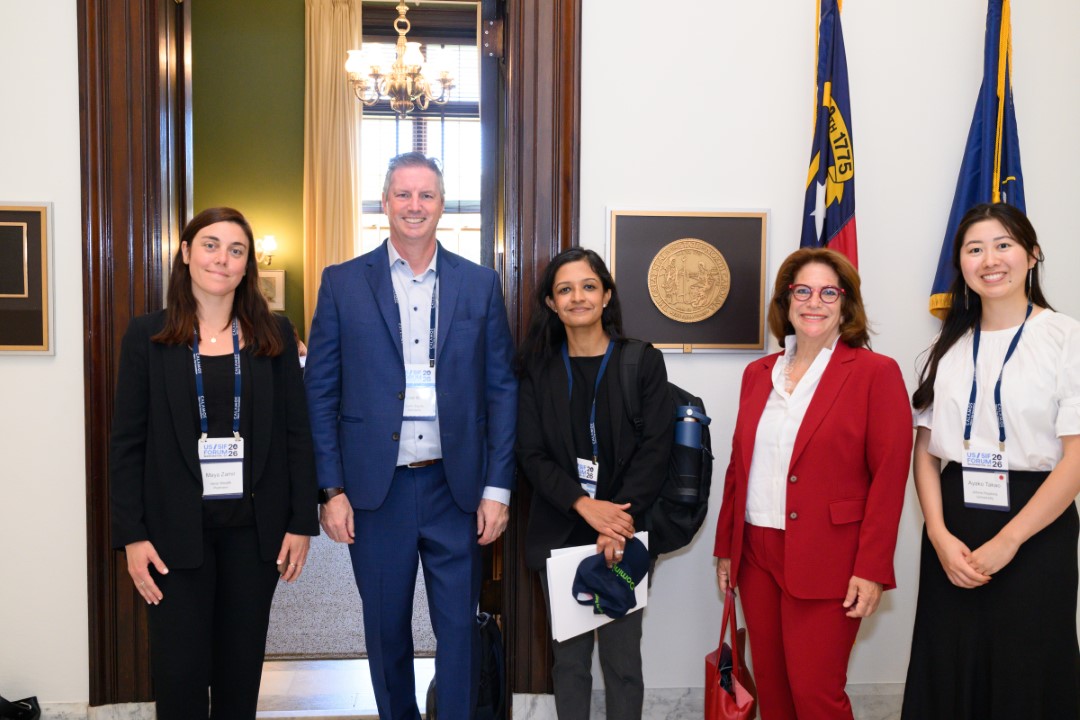
(L to R) Maya Zamir, Peter Krull, Bharti Bhargava, Nina Gardner, and Ayako Takao outside of the office of North Carolina Senator Ted Budd during US SIF’s 2026 Capitol Hill Day.
Key Issue 4: Fund Community Development Financial Institutions (CDFIs)
CDFIs deploy capital in underserved urban, rural, and tribal communities—supporting affordable housing, small-business growth, and local economies that have historically struggled to access conventional financing. The US Department of the Treasury’s CDFI Fund supports this flow of capital through programs that aim to make a positive difference in under-resourced communities across the country. In fiscal year 2024 alone, the CDFI program financed ~109,000 businesses, funded the purchase of ~45,000 affordable homes and originated ~$24.5 billion in loans and investments across the US.⁷ At Veris, CDFIs are central to how our clients pursue place-based impact, and we allocate to CDFIs as part of our platform.
Relevant Pending Legislation⁸
The Trump Administration’s proposed Fiscal Year 2027 federal budget would cut $204.5 million from the CDFI Fund and impose restrictions on how remaining dollars are awarded.⁹ Capitol Hill Day participants urged Congress members to reject these proposed cuts and urged Senators to join the bipartisan Community Development Finance Caucus.
Resources to Learn More and Support Your Own Policy Advocacy Efforts
US SIF and other organizations offer resources to help investors get educated on these issues, find contact information for their congressional representatives, and engage them directly through calls, letters, and emails. Here are some resources you can use to learn more on relevant policy issues and ways to engage.
- US SIF offers a variety of Policy Resources on their website along with policy news bulletin that is updated weekly.
- Congress.gov can help you learn about current and pending legislation as well as identify your Congressional Representatives, research their voting records, and discover their contact information.
- For Veris clients who want to explore how policy issues connect to their portfolios, reach out to your Advisor to discuss.
Sources
- US SIF
- US SIF
- https://www.congress.gov/bill/119th-congress/house-bill/3402
- https://www.congress.gov/congressional-record/volume-171/issue-176/senate-section/article/S7731-1
- https://www.cdfifund.gov/programs-training/programs/cdfi-program
- US SIF
- https://www.whitehouse.gov/wp-content/uploads/2026/04/budget_fy2027.pdf
Disclaimer
The information above is provided for informational purposes only, represents only a summary of topics discussed, does not constitute investment advice, and solely reflects the views of the authors, which are subject to change without notice. Additionally, this document contains information derived from third party sources. Although we believe these third-party sources to be reliable, we make no representations as to the accuracy or completeness of any information derived from such third-party sources and take no responsibility, therefore.
Although Veris has highlighted herein various initiatives relating to policy activism in which it has participated, no inference should be drawn as to the success or failure of such initiatives or the ultimate impact on the financial or impact results achieved by our clients.