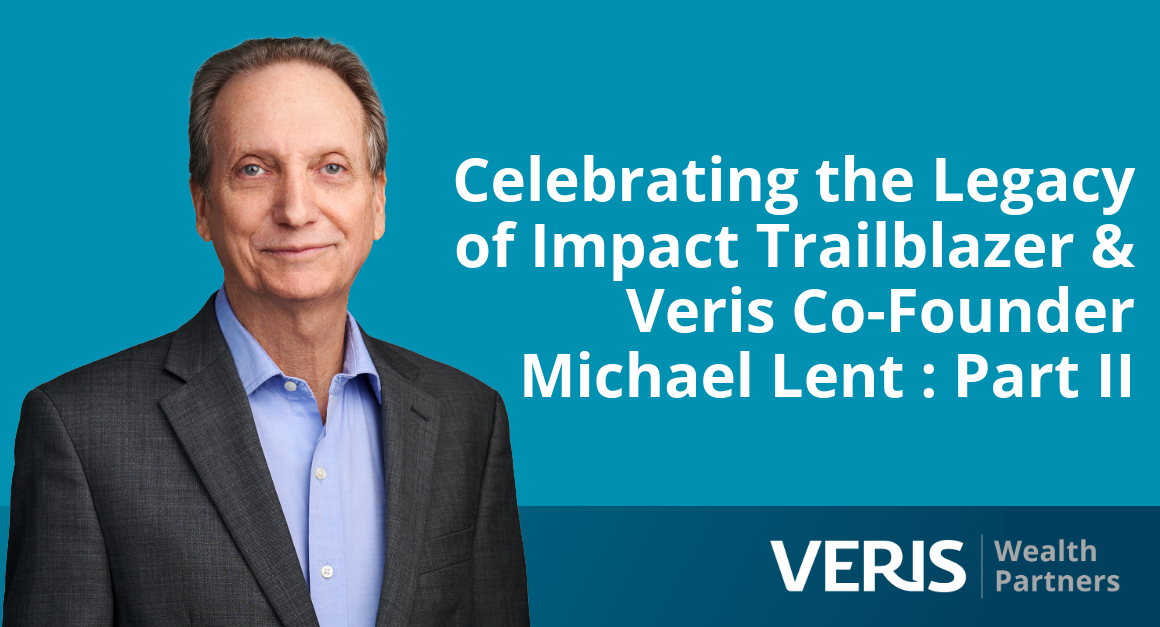
Celebrating the Legacy of Impact Trailblazer and Veris Co-Founder Michael Lent – Part II
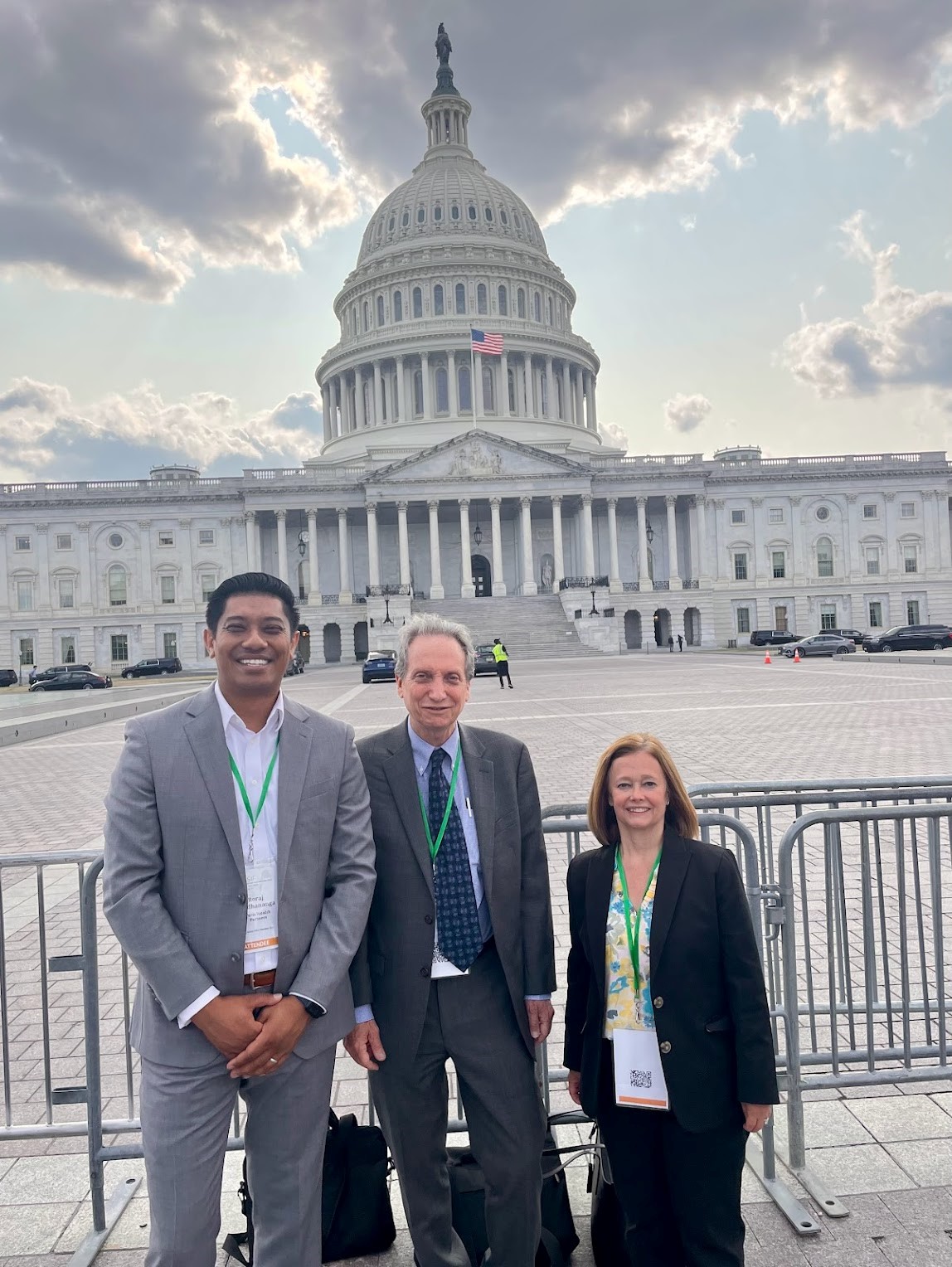
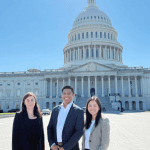
Roraj Pradhananga, Michael Lent, and Karen deRochemont in D.C. participating in US SIF’s annual Capitol Hill Day event.
The second lesson is the importance of persistence and determination. Believe in what you are doing and keep moving forward – even if you are facing pressure to give up. When I first started doing this work in the early 1990s, the few of us in this field faced a lot of criticism and dismissive talk from people who sought to discourage us. One person who led a mutual fund company told me directly that we would never build a firm focused on responsible or sustainable investing in New York City because they thought there was not enough interest. I believe that Veris is living proof that sustained belief in a more sustainable, just, and equitable world can help investors hold their ground and continue to drive progress.
Our industry may need to make some adjustments in response to emerging challenges, but we can do so without giving up our objectives. I believe maintaining our vision of a better future can help keep us on course.
As you review your Veris legacy, what are some of your proudest accomplishments?
Michael Lent. The first thing that comes to mind is that we developed a model with foundations and endowments that incorporates mission in a really fundamental way, not just as an afterthought or an add-on. That work was accomplished in collaboration with our clients. Patricia Farrar-Rivas and I served as early impact consultants to several large foundations, and we helped develop their policies and guidelines and strategies for impact investing.
Other highlights include the opportunities that I have had to speak about impact investing to The New York Fed and in other important venues. Veris became known as a firm that understood impact investors and so other sectors that were interested in how to interface with impact investors called upon us to make presentations.
Many of the other highlights are efforts that were achieved by the firm as a whole. Internally, Veris focused on building an internal culture of support and belonging that would help us live our values. I am proud that we have a robust and growing partner group, and that a majority of partners are women. I believe we have continued to elevate leaders as the firm has grown.
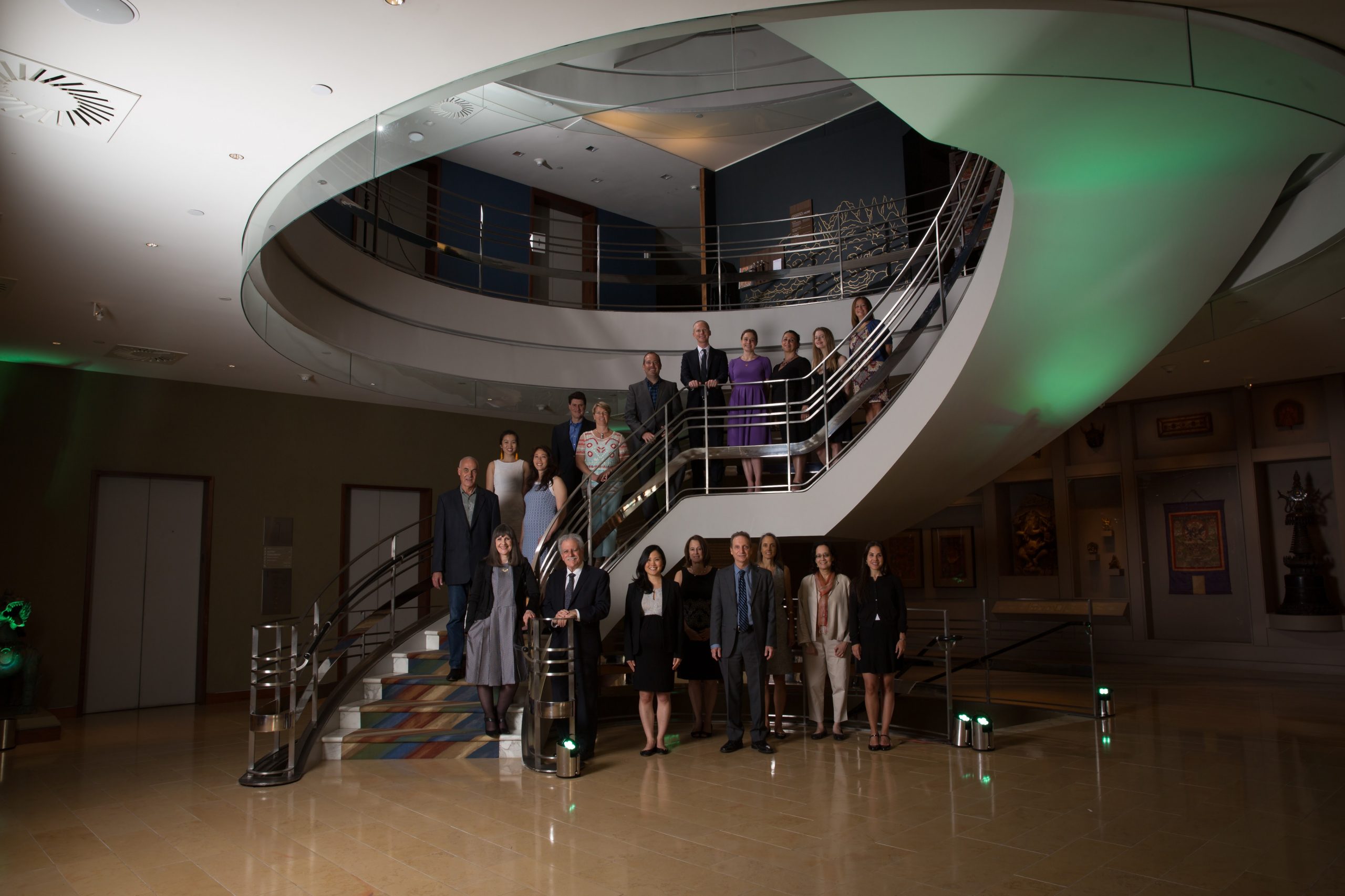
The Veris Wealth Partners team photographed at the firm’s 10-year-anniversary gathering at the Rubin Museum of Art in New York in 2017.
From the very beginning, we were about providing great client service, performance, and meeting client needs, and helping to grow our collective social and environmental impact was always a critical part of that. We wanted to have an impact. We wanted to arrest climate change. We wanted to promote poverty alleviation, real wealth building, racial equity, gender equity. We also wanted to help construct and build a field, and our clients were telling us they wanted us to do this as well. I also believe that the families and organizations that work with Veris and other impact investing firms should also be considered field builders. Clients enable us to do what we’re doing — we’re part of the same ecosystem.
I think the field building work we did is some of what I am most proud of what we as a firm have accomplished over the years. We were very early movers in a number of key areas:
- Community Development: We were early movers in investing client money in community development, including supporting financial institutions, loan funds, and approaches that addressed key needs for community wealth building, social entrepreneurship, and affordable housing. Investing in Community Development Financial Institutions (CDFIs) was a big piece of our investment strategy from the very beginning.
- Gender Lens Investing: The work our firm accomplished, led by Alison Pyott and Luisamaria Ruiz Carlile, to help develop gender lens investing was crucial at the time, helping to build that field.
- Regenerative and Sustainable Agriculture: We were early movers in this space and helped support and build out the necessary infrastructure for that work.
- Supporting Diverse Fund Managers: We were leaders in building processes and frameworks to help identify first-time fund managers who came from unserved and underrepresented backgrounds, including those founded and led by people of color and women.
What is your vision for the future of the impact investing sector?
Michael Lent: I believe we are in the midst of a global awakening about the importance of investing in a way that matches and shares your values and that interest in impact investing and values-aligned investing will only continue to grow despite policy headwinds in the U.S.
I am seeing more people recognizing that if you have an investment portfolio, you have an opportunity to not only achieve your financial goals, but also to make a difference in what you care about in the world. I’m also seeing more foundations and endowments becoming aware of the inconsistency of investing in a way that contradicts their core values.
More organizations are seeing their portfolios as an important pathway to make progress towards their mission. But even though more people and organizations are excited about opportunities in this field, unfortunately, I think that challenges are not going away. We have seen some pullback from larger institutions in response to the headwinds of today. That is unfortunate, but I believe that those of us who have been at the forefront of this work will continue to play that role.
What is giving you hope and keeping you inspired at this moment?
Michael Lent: Impact investors still believe in the importance of investing their capital in a way that can make a difference. I believe many are doubling down in response to the attacks and policy changes that seek to stop our work. They’re asking good questions and I have seen signs that they’re just as excited about what we are building together as a field.
I am hopeful to see so many people coming together to support one another. I am of course grateful to everyone who has played a role in building this firm and our field. Our clients have always inspired me because they are the ones who make our work possible.
Disclaimer
The information contained herein is provided for informational purposes only, represents only a summary of topics discussed, should not be construed as the provision of personalized investment advice, or an offer to sell or the solicitation of any offer to buy any securities. Rather, the contents including, without limitation, any forecasts and projections, simply reflect the opinions and views of the authors.